Facebook
 X
X
 Pinterest
 Copy Link
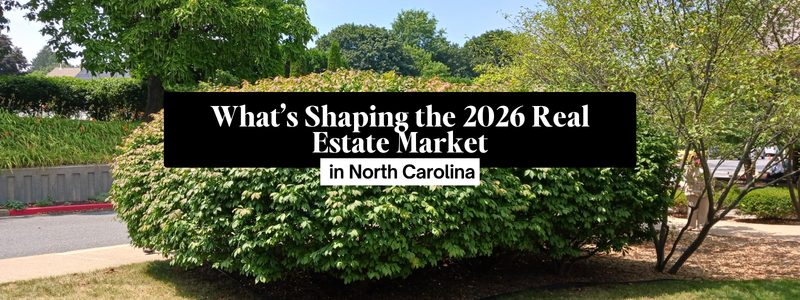
Real estate markets do not shift overnight.
They evolve gradually, shaped by interest rates, inventory levels, economic growth, migration patterns, and consumer confidence.
For buyers, sellers, and investors throughout the Triangle region, including Raleigh, Durham, and Chapel Hill, understanding what is influencing today’s market conditions makes the difference between reacting and planning strategically.
Here is what is shaping the 2026 real estate landscape across North Carolina and what it could mean moving forward.
Inventory Levels Continue to Shape Competition
Inventory remains one of the most powerful drivers in today’s market.
When available homes are limited:
-
Buyers compete more aggressively
-
Well-priced homes sell faster
-
Sellers often maintain negotiating leverage
When inventory increases:
-
Buyers gain more options
-
Negotiation opportunities expand
-
Pricing becomes more sensitive to condition and presentation
Across the Triangle, inventory levels vary significantly by neighborhood and price point. Entry-level homes may remain competitive, while higher price tiers may see longer days on market.
Hyper-local supply data is far more valuable than national headlines.
Interest Rates Influence Buyer Behavior
Interest rates continue to play a central role in decision-making.
When rates rise:
-
Some buyers pause
-
Purchasing power shifts
-
Demand may soften temporarily
When rates stabilize or decline:
-
Activity often increases
-
Competition can return quickly
-
Buyers who waited re-enter the market
However, waiting for dramatic rate drops can sometimes mean facing stronger competition and higher prices.
The more important question is not simply what rates are doing nationally but how current conditions align with personal financial goals.
Migration and Economic Growth Are Fueling Demand
North Carolina continues to attract:
-
Remote workers
-
Corporate relocations
-
Technology and healthcare professionals
-
Military families
-
Retirees
Major employers, research institutions, and continued expansion around the Triangle support long-term housing demand throughout the region.
Population growth directly impacts both residential and commercial real estate opportunities.
Buyers Are More Strategic Than Emotional
Today’s buyers are thoughtful and analytical.
They are comparing:
-
Monthly affordability
-
Long-term appreciation potential
-
Resale value
-
School districts and neighborhood stability
The urgency seen in ultra-competitive markets has shifted in many areas toward calculated decision-making.
Homes are still selling but buyers are evaluating more carefully.
Sellers who recognize this shift and price accordingly often see stronger outcomes.
Sellers Must Prioritize Preparation
The expectation of listing a property and receiving multiple offers within hours is no longer universal.
In many Triangle communities:
-
Accurate pricing matters more than ever
-
Professional marketing is critical
-
Staging and presentation influence perception
-
Repairs and updates impact offer strength
Well-prepared homes still generate strong interest.
Overpriced or poorly presented properties often experience extended market time and price reductions.
Strategic preparation protects equity.
Commercial Real Estate Reflects Regional Expansion
Commercial trends across Raleigh, Durham, and surrounding areas continue to mirror economic growth.
Expanding sectors are creating demand for:
-
Retail space
-
Industrial and logistics facilities
-
Office repositioning
-
Mixed-use development
As infrastructure and employment hubs expand, commercial opportunities follow.
Business owners and investors are closely watching traffic flow, development plans, and population growth corridors.
Real Estate Is Local, Even When Headlines Are National
National media often provides broad market narratives.
But real estate remains deeply local.
Conditions can vary dramatically between:
-
Downtown and suburban neighborhoods
-
New construction communities and established areas
-
Entry-level and luxury price points
Understanding what is happening within a specific neighborhood in Raleigh or Durham is far more valuable than reacting to national statistics.
Planning Beats Predicting
No one can predict the market with perfect accuracy.
What can be done is strategic planning based on real-time data and long-term goals.
Whether buying, selling, investing, or expanding a business footprint in 2026, success comes from informed decisions, not emotional reactions to headlines.
At Century 21 Triangle Group, we help clients analyze current market trends, evaluate opportunities, and build strategies tailored to their specific objectives.
The best first step is not guessing where the market is headed.
It is having a focused conversation about what today’s conditions mean for your goals.